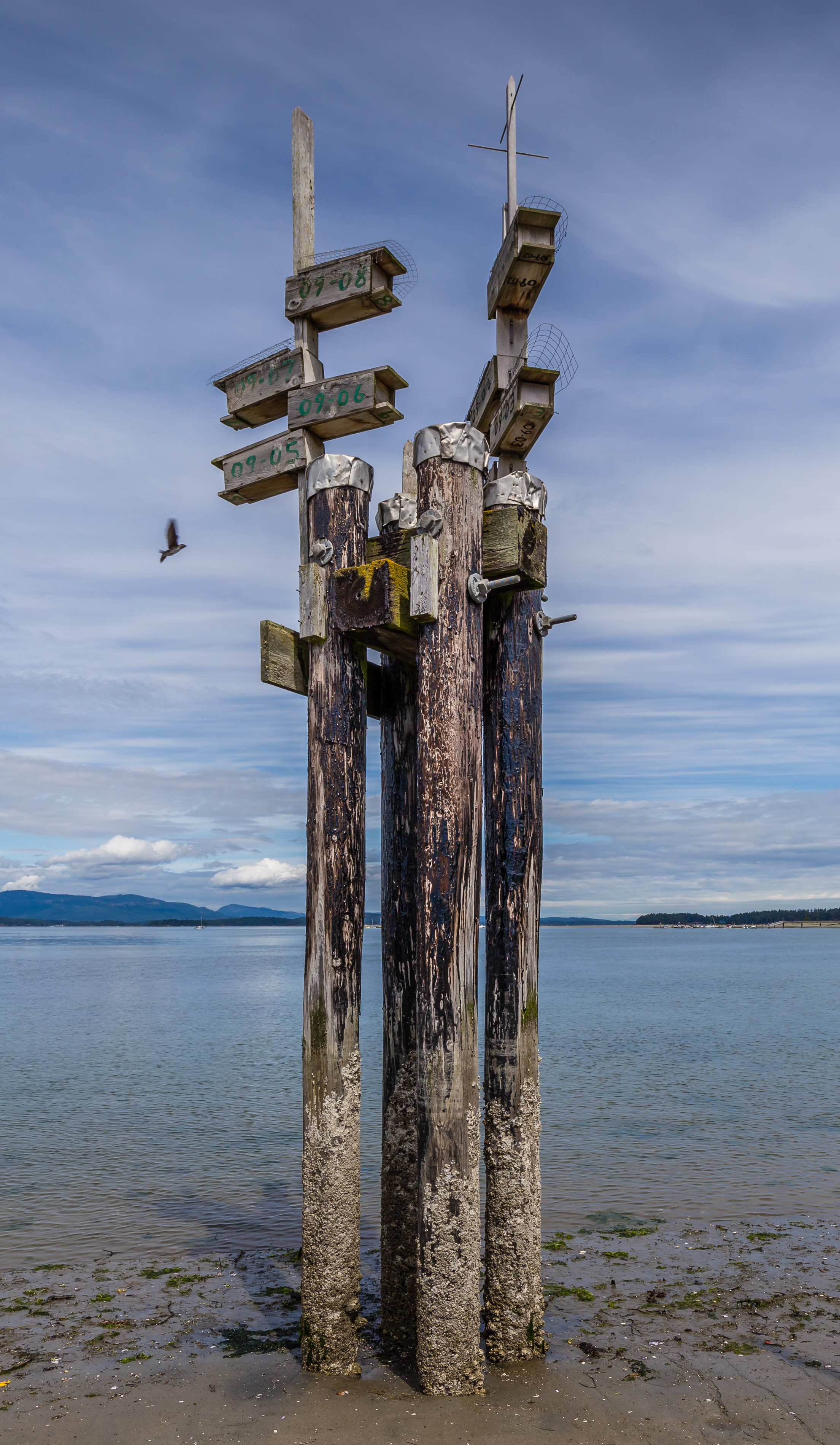
Migratory birds generally do not seek nest boxes during transit — they stop for hours or days to rest and feed. Nest boxes are most useful for species that nest in Canada after spring migration. A clear distinction between roost shelters and nest boxes helps plan a coherent layout.
Roost Shelters versus Nest Boxes
Roost Boxes
This shelter type lets birds warm up or stay dry without breeding there. The entrance is often at the bottom to retain heat, opposite a nest box whose opening is at the top. In winter, several black-capped chickadees may share one roost box.
Nest Boxes
A nest box is intended for reproduction. Internal dimensions and entrance diameter must match the target species precisely. A box that is too large or too small will be ignored, or worse, occupied by an unwanted species such as the European starling, an introduced bird that can displace native nesters.
Dimensions by Species
The following data are widely documented in North American ornithological literature and may vary slightly by source.
Indicative Dimensions
- Eastern bluebird: entrance 38 mm, floor 12×12 cm, height 28 cm
- Black-capped chickadee: entrance 28 mm, floor 10×10 cm, height 20 cm
- Tree swallow: entrance 38 mm, floor 12×12 cm, height 20 cm
- Red-breasted nuthatch: entrance 32 mm, floor 10×10 cm, height 25 cm
- Downy woodpecker: entrance 32 mm, floor 10×10 cm, height 25–30 cm
Recommended Materials
Untreated wood is the most appropriate material for a nest box. Cedar and pine resist weather well and need no chemical treatment. Boards should be 18 to 20 mm thick for adequate thermal insulation.
What to Avoid
- Pressure-treated or interior-painted wood: chemicals may harm nestlings.
- Uninsulated metal: overheats in summer and causes hypothermia in winter.
- Non-ventilated plastic: poor ventilation, condensation buildup.
- Perches at the entrance: unnecessary for target species and useful to predators such as starlings.
Orientation and Height
Nest box orientation affects internal temperature and predator protection.
Height
For most garden species, a height of 1.5 to 3 metres is appropriate. Eastern bluebirds prefer about 1.2 to 1.8 m on a metal post in open meadow. Tree swallows use boxes installed between 1.5 and 5 m.
Entrance Orientation
In most Canadian provinces, orienting the entrance southeast to east reduces exposure to cold northwest winds and rain that generally blows from the west. A slight forward tilt (5°) lets water run off without entering the box.
Hedges and Natural Shelter
Artificial structures do not replace natural shelter. A hedge of dense native shrubs — such as staghorn sumac, red-osier dogwood, or common elderberry — offers wind shelter, predator protection, and food.
Brush and leaf piles in a garden corner provide habitat for insects, which in turn feed many insectivorous migratory birds such as warblers and flycatchers.
Annual Nest Box Maintenance
An uncleaned nest box can harbour parasites — fleas, mites, blowflies — that affect breeding success in following years.
- Clean in autumn after young have left the nest, or early in spring before the first migrants arrive.
- Remove last year's nests and accumulated debris.
- Rinse with hot water and let dry in the sun.
- Check roof integrity and fastenings.
- Do not use pesticides inside or around the nest box.
Nest Box Trails in British Columbia and Ontario
In several Canadian provinces, local bird associations maintain nest box trails monitored regularly. These circuits collect data on occupancy and breeding rates. The eastern bluebird nest box trail in Ontario is one of the most documented in the country.
References
Birds Canada — birdscanada.org
Environment and Climate Change Canada — Migratory Birds